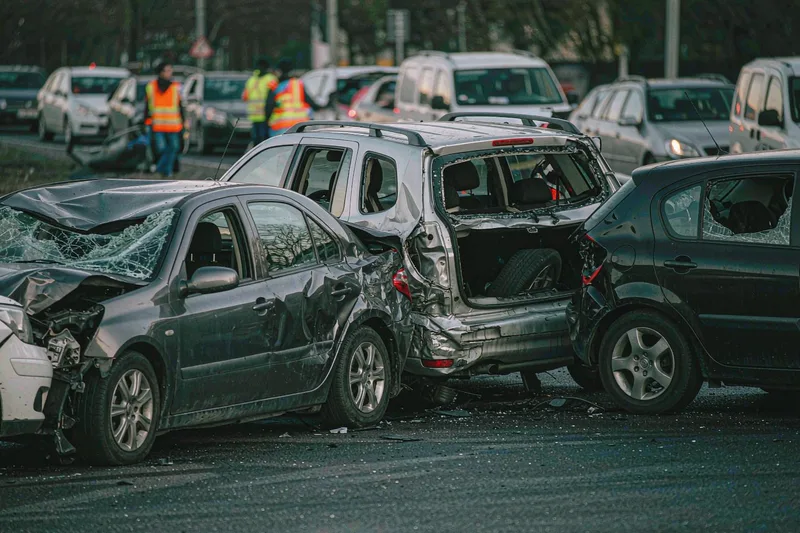
A chain-reaction crash on a highway turns a simple fender tap into a puzzle of who struck whom, and the answers decide which insurer pays. With several cars involved, fault rarely rests on a single driver, and the order of impacts becomes the central question. The pileup is where liability spreads across everyone who failed to stop in time.
How Fault Is Assigned
Investigators reconstruct the sequence from damage, skid marks, and witness accounts, then assign a share of responsibility to each driver who contributed. The driver who started it is not automatically liable for the whole chain, because each following car has a duty to keep a safe distance. The allocation is about each driver's conduct, not just who moved first in the line.
Why the Last Car Gets Blamed
The final vehicle in a stack is often presumed at fault for not stopping in time, but that presumption is rebuttable with proof it was pushed or had no room to react. The rear-most driver carries a heavy burden because following distance is the clearest duty on a busy road. Showing the chain left no gap is the defense that shifts the blame forward to another car.
Comparative Fault Across States
States split the bill differently: some bar recovery if you are mostly at fault, while others reduce the payout by your share of the blame. The same pileup produces different results depending on which model your state uses. Knowing the rule tells you whether a partial fault ends the claim or merely trims the amount you can recover from others.
Evidence That Breaks the Chain
Dashcam footage, the spacing of the cars, and the point of first impact are the details that separate the drivers who had no chance from those who were simply too close. Photos taken before the cars are moved preserve the order that statements later distort. The physical scene, captured quickly, is the strongest witness in a multi-car case and the hardest for an insurer to dispute.
Dealing With Several Insurers
With many policies in play, each company argues to push fault onto another, and the injured driver faces a circle of adjusters pointing at one another. Filing promptly with your own collision coverage can keep you moving while the fault fight resolves. The practical move is to claim where you are covered and let the insurers sort the shares among themselves.
A pileup spreads fault across the line of cars, so do not assume the first mover pays for all, and do not accept the rear-driver presumption without challenge. Learn your state's comparative rule, gather the scene before it clears, and file where you are covered to avoid the adjuster shuffle. The chain of impacts is the story; tell it with evidence before the cars are towed and the memory of the order fades.
If you are in a stack, photograph every car's position and damage from outside the lane before you move, because once the vehicles are separated the sequence becomes a matter of opinion rather than fact. Exchange details with each driver, not just the one behind you, and note the weather and visibility that contributed to the close spacing. A minute of documentation at the scene is worth weeks of argument later when three insurers each insist the other car started the chain.