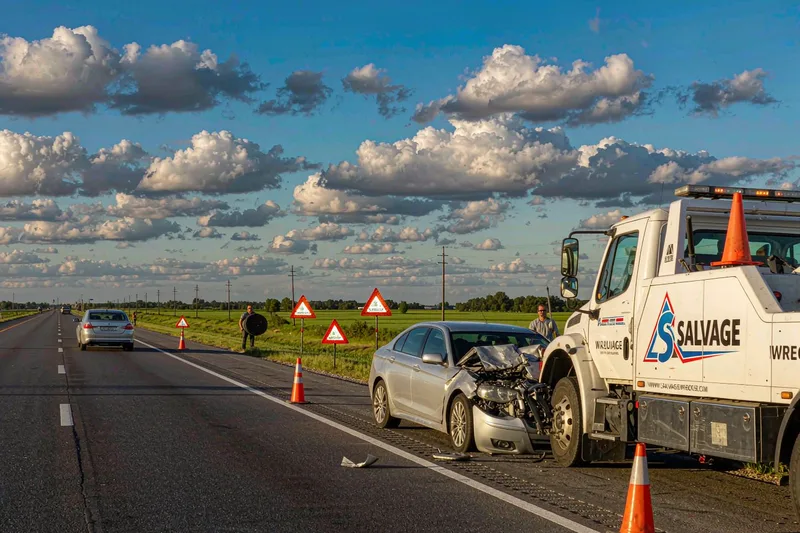
Roughly a dozen states still run some version of a no-fault system, which means the question of who pays rarely begins with who caused the crash. Your own policy is designed to absorb your medical costs up to a limit, regardless of the other driver's conduct, and that single feature reshapes every claim filed in those states.
No-Fault Does Not Mean No Bills
The personal-injury protection on your policy covers a set amount of treatment, but once that ceiling is reached the remaining balance is yours to resolve. A driver who assumed no-fault meant the insurer handled everything is often surprised by the gap. The system spreads small claims off the courts; it does not erase the cost, it caps how much the other driver's insurer will ever pay you directly.
The Threshold That Opens a Lawsuit
No-fault states let you sue the at-fault driver only after crossing a threshold, which is written either as a dollar amount of bills or as a definition of serious injury. Below that line, your recourse stays inside your own policy; above it, the normal fault claim reopens. Knowing which side of that line your case falls on tells you whether you are negotiating with your insurer or someone else's.
Add-On and Pure Are Not the Same
An add-on no-fault state lets you still sue for pain and suffering on top of your protection benefits, while a pure no-fault state generally bars that unless the injury is severe. Comparing the two is like comparing a deductible you can exceed to a wall you cannot pass: same label on the policy, very different room to maneuver once you are hurt.

Where Fault Still Decides Things
Property damage usually escapes the no-fault rule entirely, which is why the repair of your car is still pursued against the driver who hit it. The no-fault machinery mostly wraps around people, not metal, so a destroyed vehicle and a sprained wrist can follow two completely different payment paths from the same collision.
Reading Your Own Declarations Page
The fastest way to know your standing is the declarations page of your policy, where the PIP limit and any lawsuit-threshold language sit in plain print. Photograph it and the coverage numbers before you need them, because the adjuster will quote those figures back to you and you want to be reading the same page. Confirm whether your state is add-on or pure, since that single word changes your options after a real injury.
No-fault is a routing rule, not a forgiveness rule: it sends your early bills to your own insurer and gates the bigger claim behind a threshold. Learn the threshold type and your PIP limit before the crash, keep the report, and you will know immediately whether you are inside the system or finally allowed to step outside it.
One habit prevents almost all no-fault confusion: photograph your declarations page and the coverage labels the day you buy the policy, not the day you crash. The numbers you read in calm weather are the numbers that decide your recovery in a storm. Drivers who wait until after a collision are parsing fine print while injured and pressured, which is the worst moment to learn the threshold exists. A two-minute photo now spares you a confused, expensive phone call at the exact moment you can least afford it.